Krug kontrole


The Structure of the Exercise
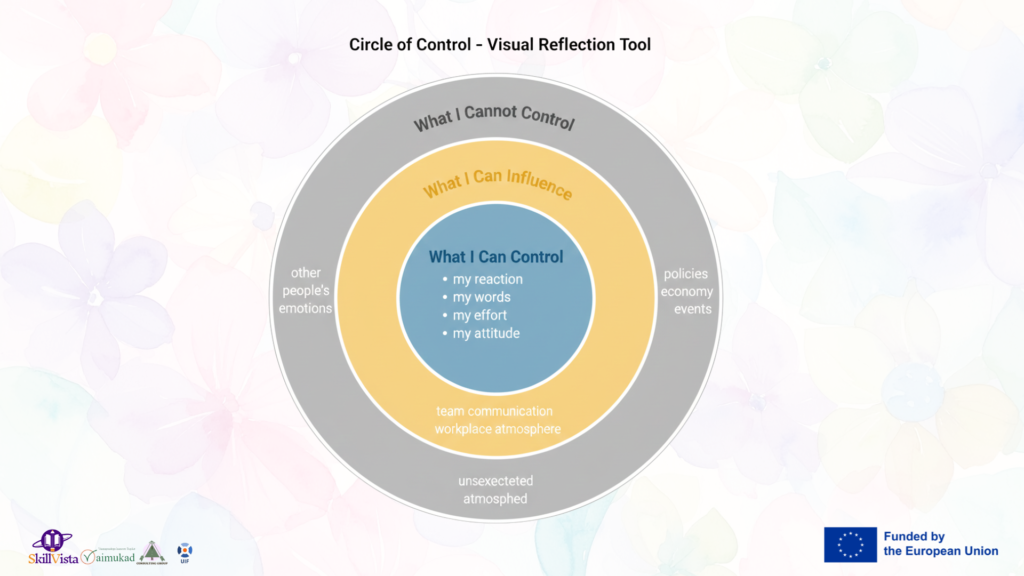
The tool consists of three concentric circles:
1. Inner Circle – What I Can Control
This includes:
- My reaction
- My tone
- My effort
- My preparation
- My behaviour
This is the area where personal responsibility lies.
The Structure of the Exercise
The tool consists of three concentric circles:
1. Inner Circle – What I Can Control
This includes:
- My reaction
- My tone
- My effort
- My preparation
- My behaviour
This is the area where personal responsibility lies.
2. Middle Circle – What I Can Influence
This includes:
- Team communication
- Group atmosphere
- Discussions
- Relationships
- Outcomes through negotiation
This area requires collaboration and communication skills.
3. Outer Circle – What I Cannot Control
This includes:
- Other people’s emotions
- Company policies
- Economic changes
- Unexpected events
- Past mistakes
Recognising this boundary reduces unnecessary stress.
Step 2: Map the Situation Visually
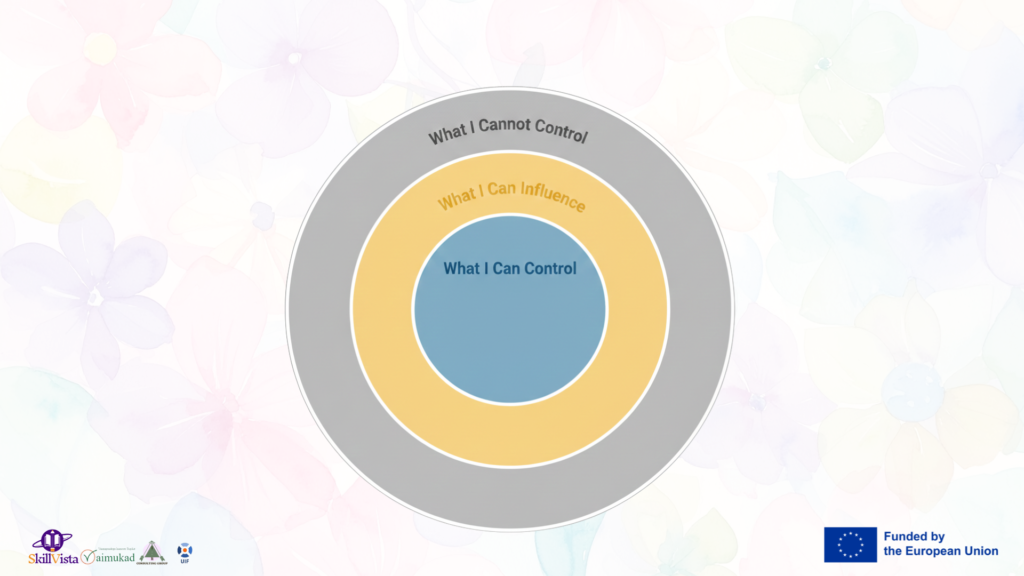
Provide a blank Circle of Control diagram.
Ask learners to write or draw elements of the situation into the three circles.
Examples:
Outer Circle:
“My boss’s mood”
“Company decision”
Middle Circle:
“How I explain my perspective”
“How I respond in discussion”
Inner Circle:
“My tone”
“My preparation”
“My body language”
Encourage discussion but avoid judgment.
The goal is awareness, not blame.
Step 2: Map the Situation Visually
Provide a blank Circle of Control diagram.
Ask learners to write or draw elements of the situation into the three circles.
Examples:
Outer Circle:
“My boss’s mood”
“Company decision”
Middle Circle:
“How I explain my perspective”
“How I respond in discussion”
Inner Circle:
“My tone”
“My preparation”
“My body language”
Encourage discussion but avoid judgment.
The goal is awareness, not blame.
Step 3: Guided Reflection
Ask learners:
- Where are you currently focusing most of your energy?
- Is it inside or outside your control?
- What happens when you focus on things you cannot control?
This step often leads to powerful insights.
What Skills This Exercise Develops
The Circle of Control strengthens:
- Emotional regulation
- Adaptability
- Conflict management
- Decision-making
- Responsibility
- Leadership mindset
- Stress management
It is particularly effective for adults who:
- Experience anxiety in group settings
- Feel overwhelmed by workplace expectations
- Struggle with self-confidence
- Have difficulty separating emotion from action
Ovaj projekt je financiran iz programa Erasmus+ Europske unije.
Podrška Europske komisije za izradu ove publikacije ne predstavlja odobrenje sadržaja, koji odražava isključivo stajališta autora, te Komisija ne može biti odgovorna za bilo kakvu upotrebu informacija koje se u njemu nalaze.
Više objava
Pošaljite nam poruku
Primajte novosti i ostanite povezani - Pretplatite se na naš newsletter

SkillVista
Financirano od strane Europske unije. Izneseni stavovi i mišljenja su, međutim, isključivo stavovi autora/autorica i ne odražavaju nužno stavove Europske unije ili Izvršne agencije za obrazovanje i kulturu (EACEA). Ni Europska unija ni EACEA ne mogu se smatrati odgovornima za njih.
- Facebook stranica
- pošta: admin@skillvista.eu