Piloting Report – Croatia
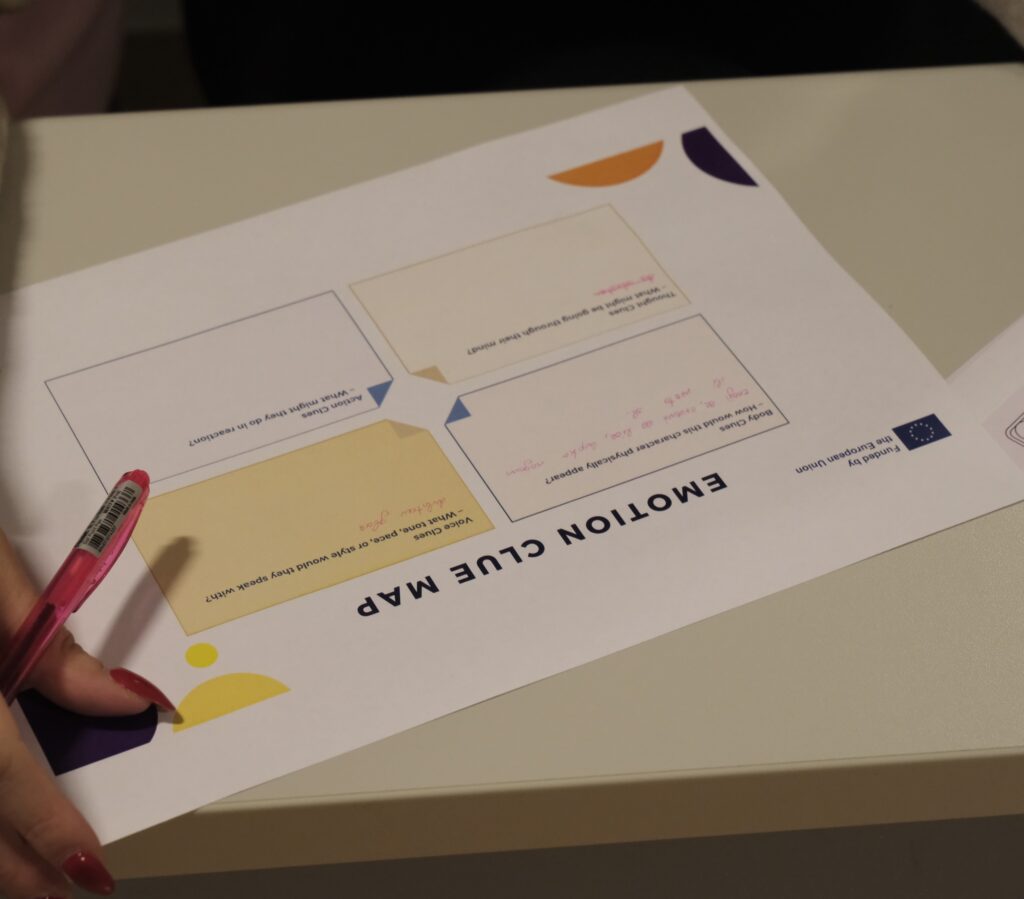
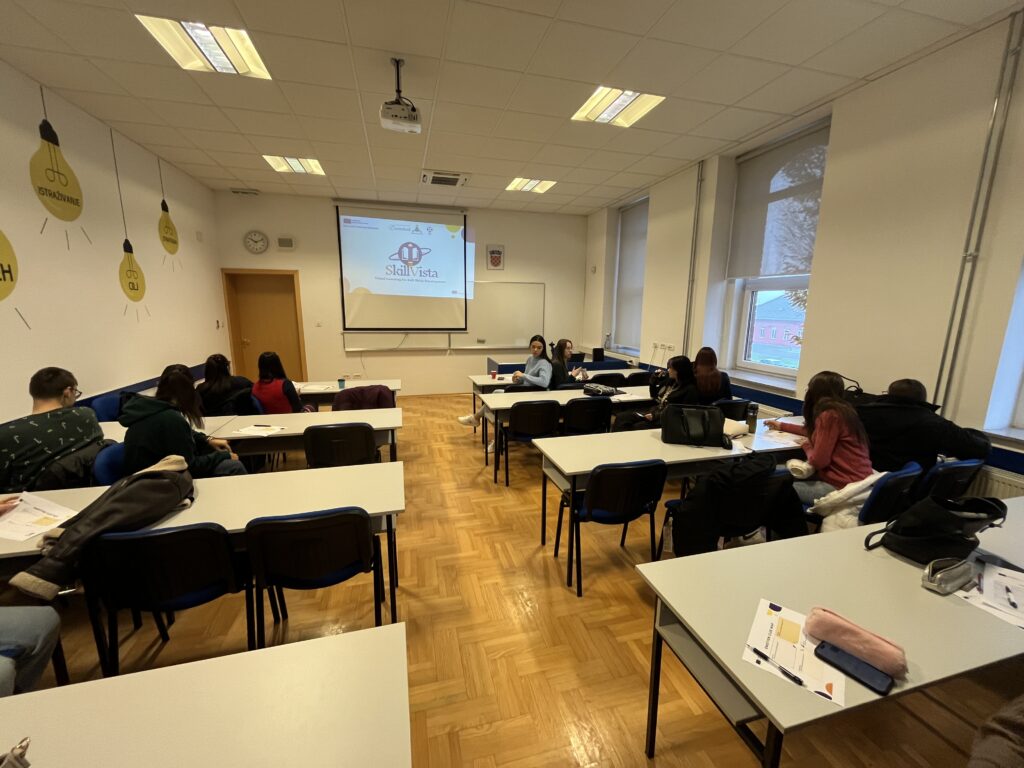

During autumn 2025, the Croatian partner implemented the SkillVista piloting phase across NGO-led training programmes, employability initiatives, and non-formal adult education centres.
The pilot engaged:
12 adult educators
30 vulnerable adult learners
Participants came from diverse backgrounds, including long-term unemployment, low formal education levels, social exclusion, and migration experiences. Many learners expressed low confidence in communication and teamwork, often linked to previous negative school experiences.
Rather than creating a separate course, the piloting phase focused on integrating the Komplet za savladavanje vizualne metodologije and the SkillVista Platform tools directly into existing educational programmes. This approach allowed educators to test the tools in real-life teaching environments.
Educators introduced visual methods gradually, allowing learners to become comfortable with non-traditional learning formats.
The following tools were tested:
- Simple diagrams explaining communication cycles
- Mind maps structuring decision-making
- Behaviour sorting boards (“appropriate vs inappropriate”)
- Scenario-based simulations reflecting workplace and public situations
- Emotional mapping charts
- Step-by-step visual problem-solving flows
- Visuals were not used to replace discussion but to support it. They acted as cognitive anchors, helping learners structure thoughts and better understand abstract concepts.
The pilot prioritised competencies most relevant to social inclusion and employability:
- Communication skills
- Social norms and appropriate behaviour
- Teamwork and collaboration
- Emotional intelligence and empathy
- Problem-solving and adaptability
- Each session followed a clear structure:
- Topic introduction using a visual prompt
- Practical challenge or scenario
- Guided discussion
- Visual reflection activity
This predictable structure supported learners who experience anxiety in learning settings.
Before the pilot, most educators had limited structured experience using visual methodologies.
After implementation:
- Confidence in applying visual tools increased significantly
- Educators reported stronger learner engagement
- Visual methods were seen as practical and adaptable
- Teachers shifted from “explaining” soft skills to “making them visible”
One educator reflected:
“The visuals helped me explain concepts that usually feel abstract and difficult.”
Learner self-assessments showed consistent improvement across all tested soft skills.
Notable growth areas included:
- Increased confidence in communication
- Better collaboration in group tasks
- Improved structured thinking in problem-solving
- Greater awareness of emotions and behavioural consequences
Many learners expressed that visuals reduced their fear of making mistakes.
One participant shared:
“When I see it visually, I understand faster. I don’t feel stressed.”
Another added:
“Now I think before I react.”
Across sessions, educators reported:
- High engagement levels
- Increased participation from quieter learners
- More meaningful discussions
- Greater emotional reflection
Visual tools proved particularly effective for learners with lower literacy levels and those who previously struggled in traditional learning formats.
Challenges Identified
Initial hesitation when introducing visual methods
Limited time to explore all platform scenarios in depth
Some need for clearer navigation within the digital platform
These insights will inform further development of both the Toolkit and the Platform.
Based on Croatian feedback, future improvements include:
More ready-to-print templates
Additional culturally adaptable scenarios
Short refresher training sessions for educators
Expanded printable materials for low-digital-access contexts
The pilot strongly suggests that visual thinking methods are most sustainable when integrated gradually into existing adult education curricula rather than delivered as standalone modules.
Overall Impact
The Croatian piloting phase confirms that structured visual methodologies:
✔ Increase learner confidence
✔ Improve participation
✔ Strengthen social and workplace skills
✔ Support inclusive learning environments
✔ Empower educators to innovate
Most importantly, visual learning created a sense of psychological safety — a critical factor for vulnerable adult learners rebuilding confidence.
Ovaj projekt je financiran iz programa Erasmus+ Europske unije.
Podrška Europske komisije za izradu ove publikacije ne predstavlja odobrenje sadržaja, koji odražava isključivo stajališta autora, te Komisija ne može biti odgovorna za bilo kakvu upotrebu informacija koje se u njemu nalaze.
Više objava
Pošaljite nam poruku
Primajte novosti i ostanite povezani - Pretplatite se na naš newsletter

SkillVista
Financirano od strane Europske unije. Izneseni stavovi i mišljenja su, međutim, isključivo stavovi autora/autorica i ne odražavaju nužno stavove Europske unije ili Izvršne agencije za obrazovanje i kulturu (EACEA). Ni Europska unija ni EACEA ne mogu se smatrati odgovornima za njih.
- Facebook stranica
- pošta: admin@skillvista.eu